


We read seven FY2025-26 annual reports credited to Kalolwala & Associates (K&A): Federal Bank, Marico, Havells, Kotak Mahindra Bank, IndiGo, Nestlé India and Apollo Tyres. The work is strongest on governance pages, capital trade-offs, ESG targets shown against 2030 and leadership letters that admit a hard year. It is weakest on the digital PDF.
In this article
 In short
Key takeaways
- We scored seven FY2025-26 reports credited to Kalolwala & Associates (K&A): Federal Bank, Marico, Havells, Kotak Mahindra Bank, IndiGo, Nestlé India and Apollo Tyres. Each carries the credit 'A K&A creation'.
- The average is 20.3 out of 35, with a median of 21 and a range of 15 to 24. The four integrated reports average 22.8; the three conventional annual reports average 17.0.
- Governance is K&A's strongest criterion relative to the field, at 3.3 out of 5. Federal Bank has the best governance pages in our 35-report sample, and Marico and Nestlé India are among the few that say what the board evaluation found.
- Federal Bank's capital trade-offs spread and Marico's 'Performance against 2030 Targets' page show integrated thinking and ESG progress more plainly than most reports in the sample.
- The weak spot is digital, at 2.0 out of 5. None of the seven has an online edition, and Kotak's PDF bookmarks still carry production file numbers.
Kalolwala & Associates, which signs its work as K&A, puts a short line at the back of the reports it makes: "A K&A creation". We found it on seven FY2025-26 reports from Indian listed companies, and scored all seven on the same seven-point card we used to compare five annual report agencies. This piece looks only at those seven, and at what they do well.
The seven are Federal Bank, Marico, Havells India and Kotak Mahindra Bank, which publish integrated reports, and IndiGo (InterGlobe Aviation), Nestlé India and Apollo Tyres, which publish conventional annual reports. They average 20.3 out of 35, with a median of 21 and a range of 15 to 24. Split by format, the integrated reports average 22.8 and the conventional ones 17.0, a gap that tells you as much about the client's choice of format as about the agency.
A caveat before the detail. The credit tells us the company chose to name K&A; it doesn't tell us what K&A was hired to do. A company's finance team, company secretary and auditors write and approve much of any annual report, and the statutory sections are sometimes typeset elsewhere. So when we say a K&A report does something well, we mean the published report does, not that we know who wrote that page. On its website, K&A describes itself as a stakeholder communication agency whose services include integrated annual reporting and sustainability and ESG reporting.
| Criterion (average out of 5) | K&A | Range across the five agencies |
|---|---|---|
| Strategy and narrative | 3.1 | 3.0–3.6 |
| Integrated thinking and the capitals | 2.7 | 2.1–4.1 |
| BRSR and ESG integration | 2.9 | 2.6–4.3 |
| Governance disclosure | 3.3 | 3.0–3.4 |
| Financial storytelling | 3.0 | 3.0–3.7 |
| Design and readability | 3.3 | 3.3–3.6 |
| Digital version | 2.0 | 2.0–2.9 |
Governance pages that go past the minimum
Governance is the flattest criterion in our comparison, with every agency averaging between 3.0 and 3.4. K&A's 3.3 is second only to WyattPrism, and the best governance pages in the whole 35-report sample are in a K&A report.
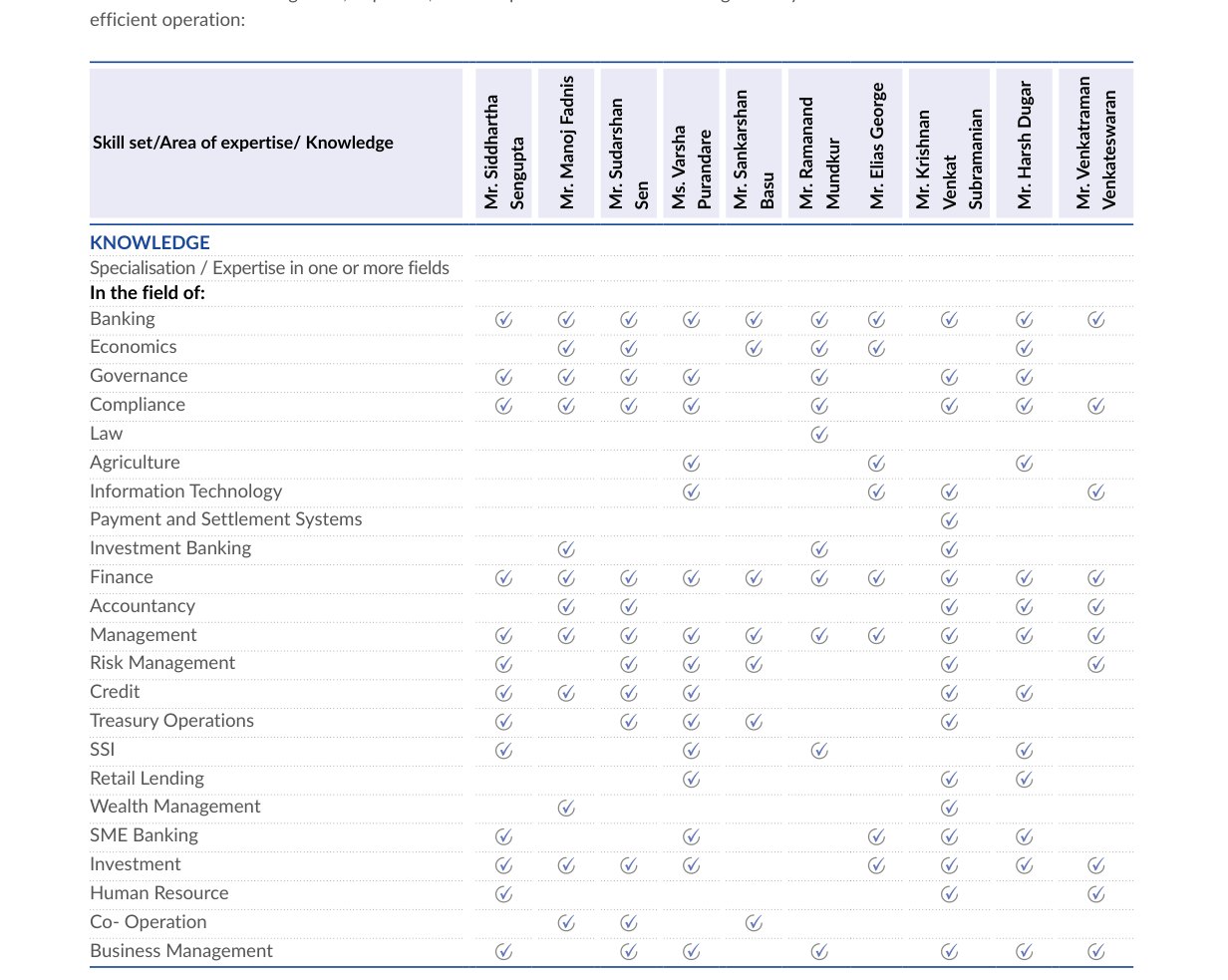
Federal Bank's integrated report does three things most banks don't. It opens with a Board responsibility statement in which the board acknowledges its responsibility for the integrity of the report and confirms it presents "a fair, balanced and comprehensive view" (PDF p. 3). Its corporate governance report maps every director against 23 named skills, from treasury operations to payment and settlement systems, one tick at a time. And it gives a spread to capital trade-offs, which we come back to below.
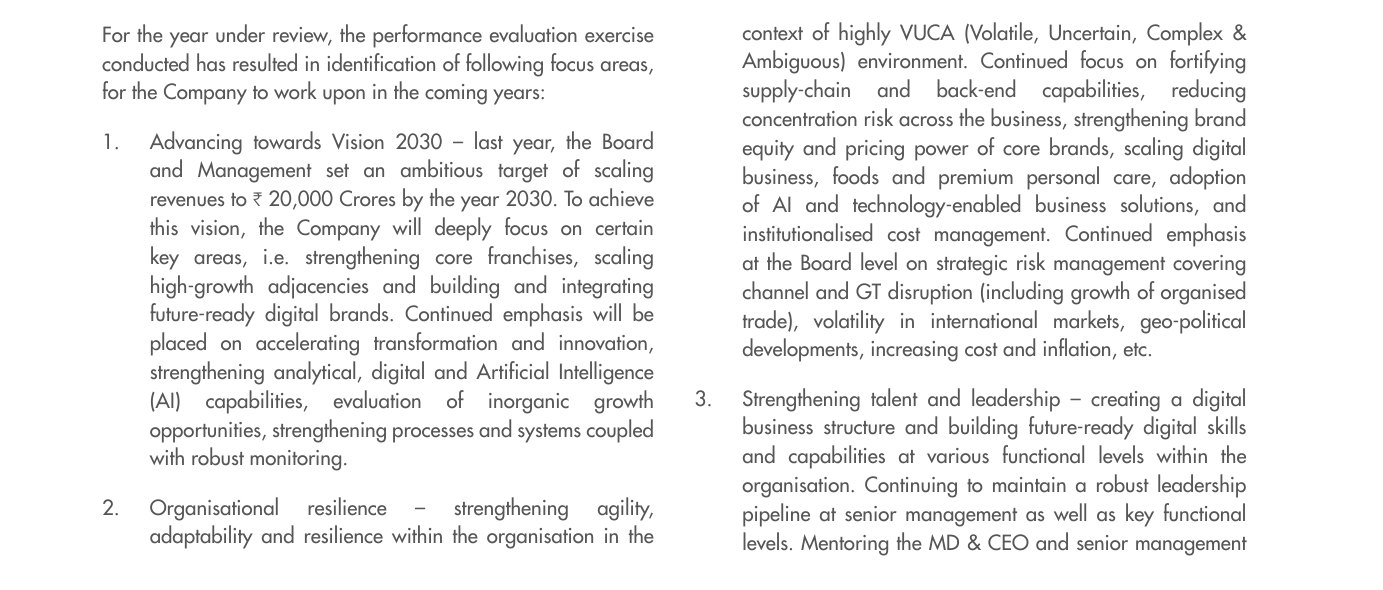
The board evaluation is where most Indian reports go quiet. They describe the process, say the board was satisfied and move on. Two K&A reports are among the handful in our sample that say what the evaluation actually found. Marico's lists the focus areas that came out of it for the years ahead: the Vision 2030 revenue target of ₹20,000 crore, organisational resilience, and talent and leadership, including mentoring the MD and CEO (PDF p. 155). Nestlé India's says an independent global HR and risk advisory firm ran the process, and that the board asked for better background papers and more meeting time on strategy and risk (PDF p. 176).
Showing the trade-offs, not just the capitals
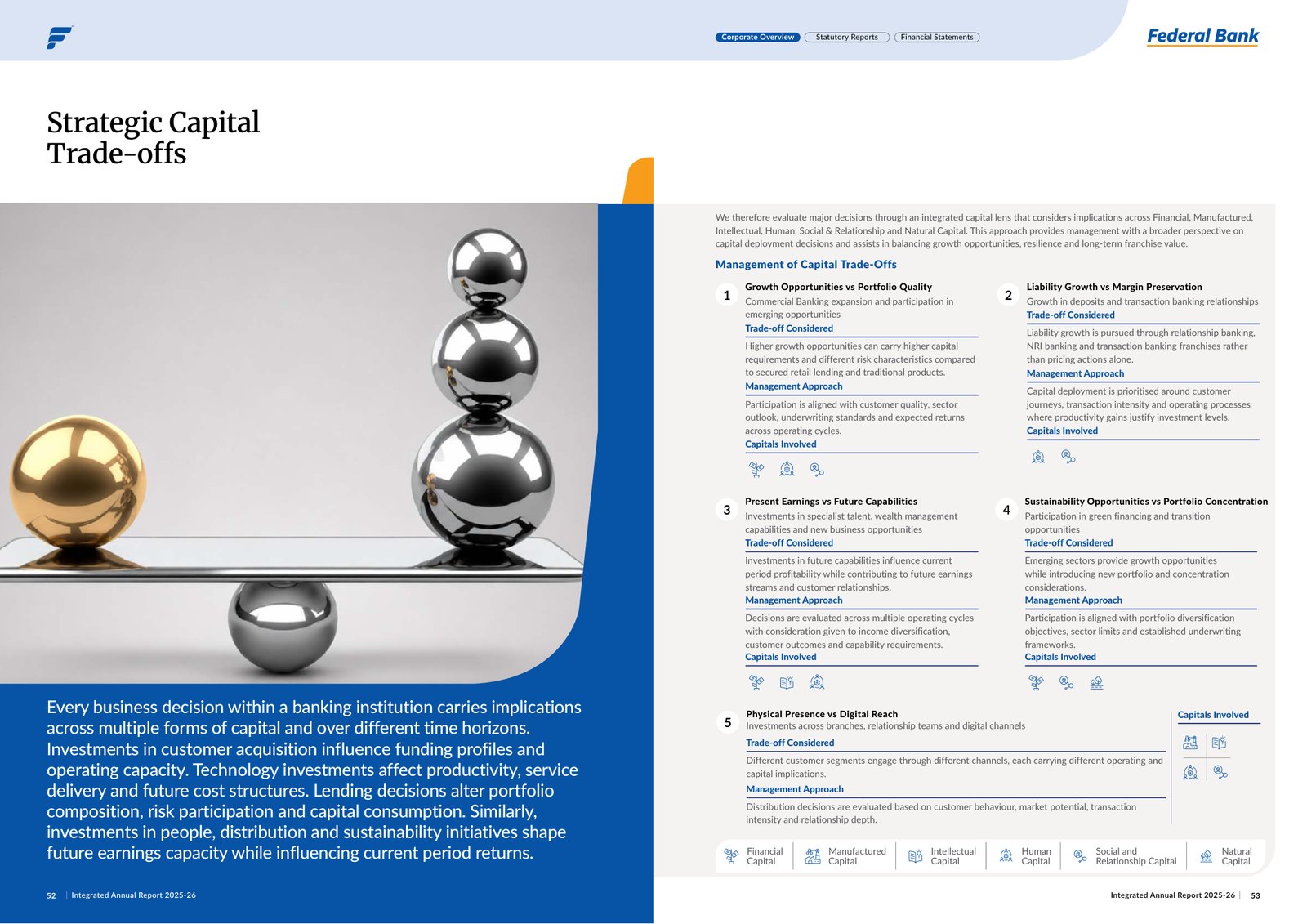
Integrated thinking is K&A's middle-of-the-table criterion at 2.7, but its best example is unusual. Plenty of integrated reports draw the six capitals as icons. Very few explain where the company chose one over another. Federal Bank's "Strategic Capital Trade-offs" spread names five such decisions, among them growth against portfolio quality, liability growth against margins and physical branches against digital reach. Each comes with the trade-off considered, the management approach and the capitals involved.
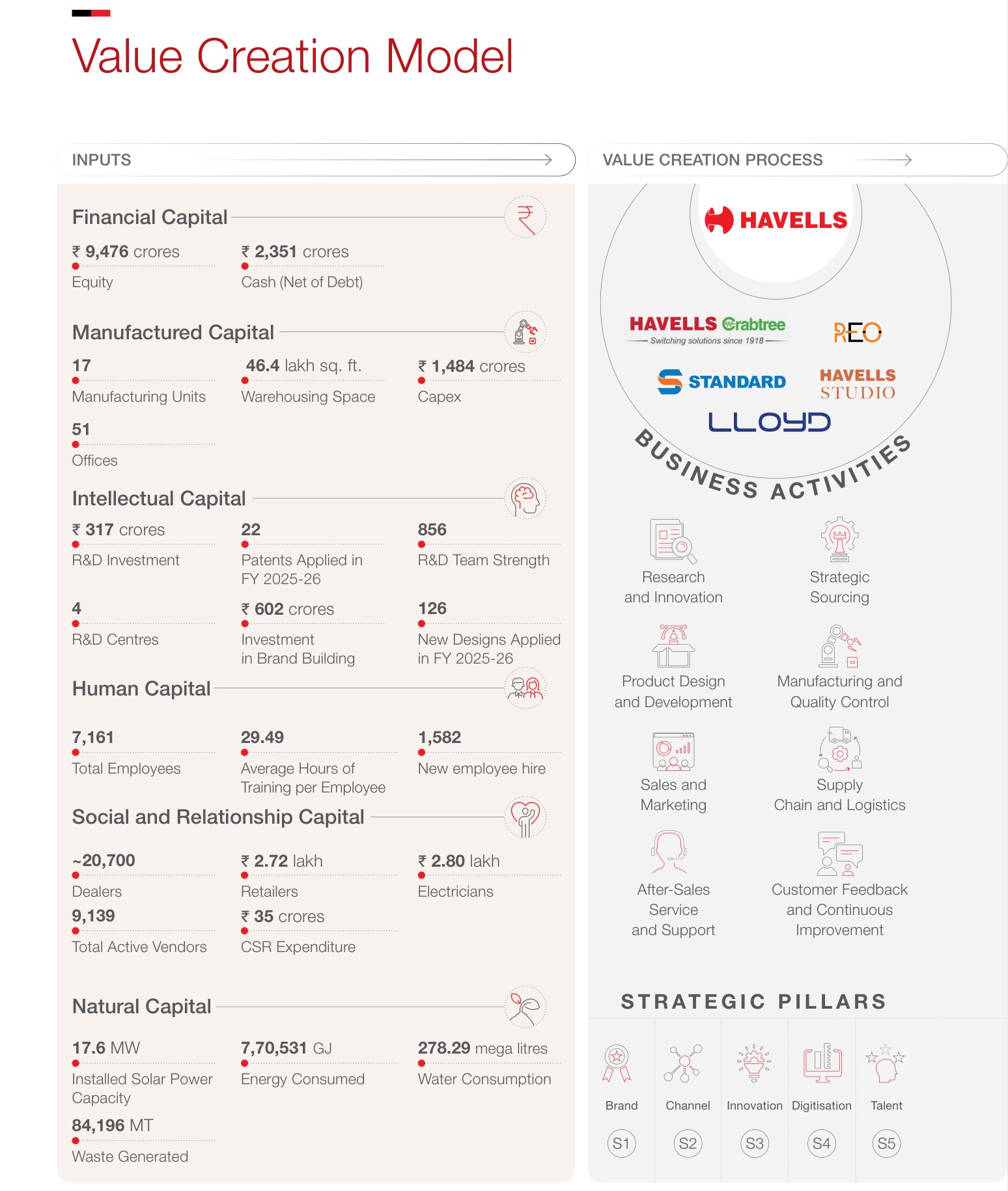
Havells' value creation model is the other one we'd point to. It's one of the few quantified models we found outside the two agencies whose clients publish the most integrated reports, with real numbers for every capital: ₹317 crore of R&D spending, 7,161 employees, about 20,700 dealers, 17.6 MW of installed solar capacity and 278.29 megalitres of water consumed.
ESG targets you can check at a glance
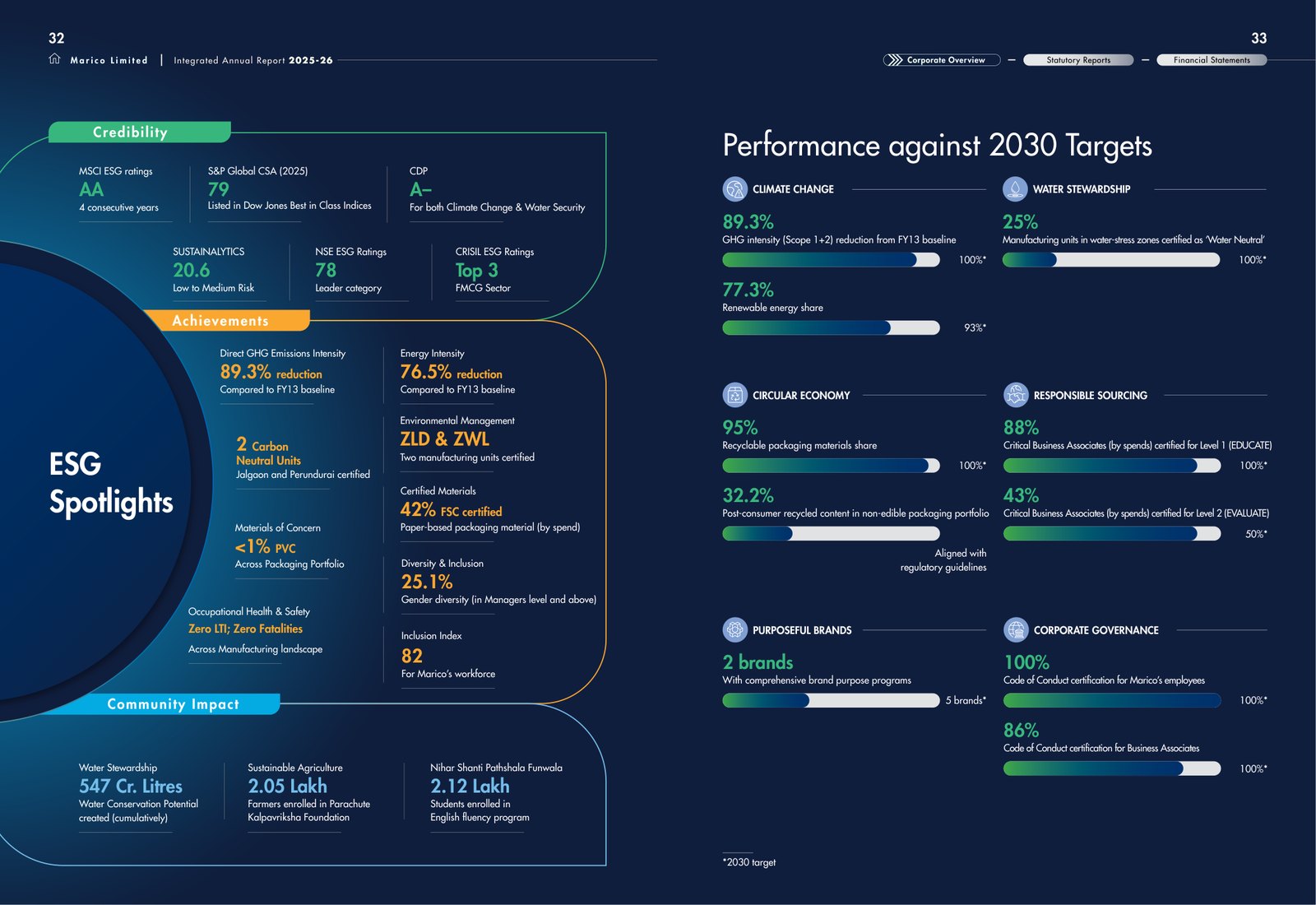
Marico's "ESG Spotlights" spread is one of the best ESG pages in the sample. The left half collects ratings and achievements; the right half, "Performance against 2030 Targets", puts every goal on a progress bar against its target. Greenhouse gas intensity is down 89.3% from the FY13 baseline against a 100% goal, renewable energy is 77.3% against 93%, and 43% of critical business associates are certified at level 2 against a 50% target. A reader can see in seconds where Marico is close and where it isn't, which is the point of the page.
Letters and charts that admit a hard year
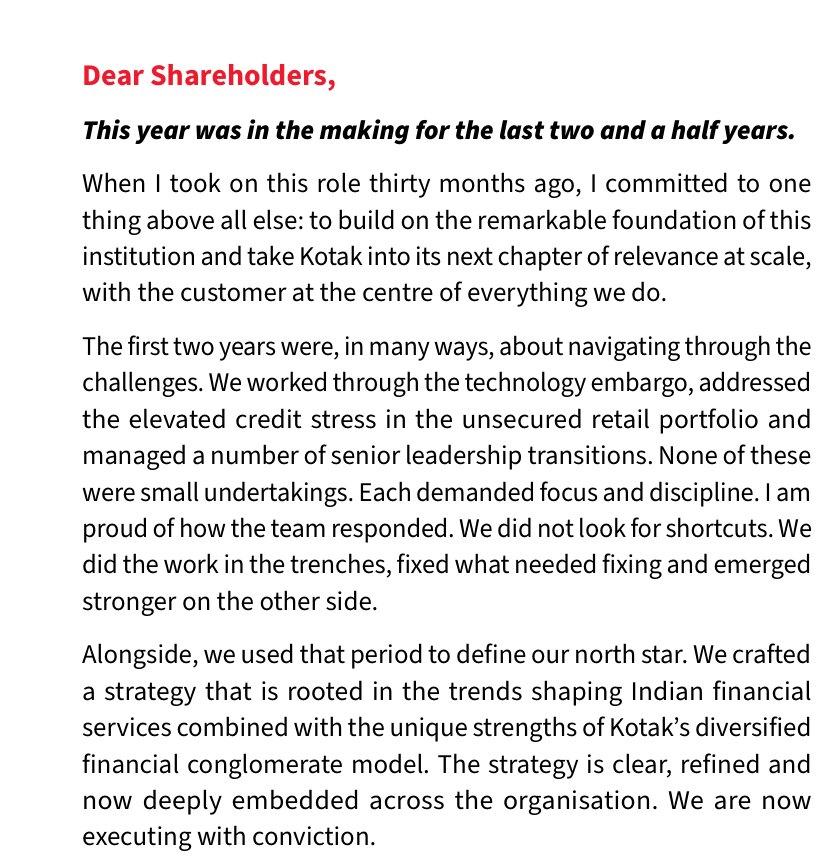
Candour is the weakest part of the narrative across all five agencies, so the K&A reports that manage it stand out. Kotak Mahindra Bank's MD and CEO's letter uses its opening paragraphs to name the problems of the previous two years: the technology embargo, the elevated credit stress in the unsecured retail portfolio and a run of senior leadership changes. Only then does it turn to strategy.
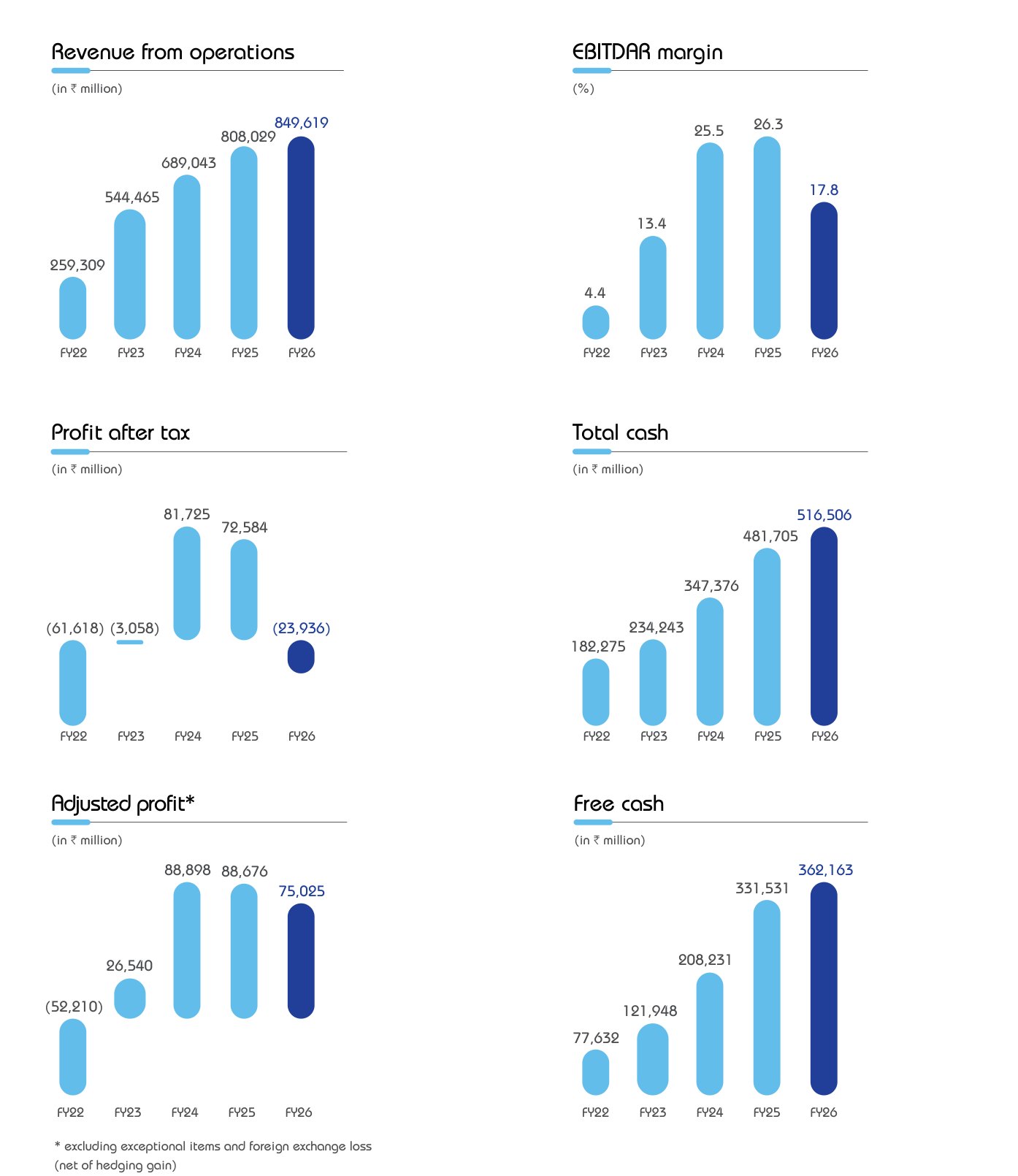
IndiGo's five-year KPI page does the same thing with numbers. Revenue, total cash and free cash rose, but the EBITDAR margin fell from 26.3% to 17.8% and the year ended in a loss after tax of ₹23,936 million, and the page charts both in the same style as the good news. Charting a weak year without hiding it is harder, and more useful, than charting a good one.
Where it's weaker
Digital is the clearest gap. K&A averages 2.0 out of 5 on the digital version, level with Report Yak at the bottom of the five. We checked every company's website and found no online HTML edition for any of the seven reports. The PDFs have slips too: in Kotak's, the "06_Board of Directors" bookmark jumps to page 1 instead of the board page, and the bookmark names still carry their production file numbers. To be fair, this is everyone's weak spot, and no agency in our comparison averages better than 2.9.
The other gap is between formats. The three conventional annual reports, IndiGo (19), Nestlé India (17) and Apollo Tyres (15), average 17.0, almost six points below the four integrated reports. Without the structure an integrated report brings, there's less of the value creation, capitals and target-tracking work that earns the higher scores. Integrated thinking (2.7) and BRSR and ESG integration (2.9) sit below the leaders for the same reason.
Who it suits
Judged only from these seven reports, K&A suits a company that wants its governance and leadership story told with more substance than the statutory minimum: a bank or a consumer business with a strong board narrative, a willingness to explain trade-offs, and ESG goals it's prepared to show against target. Its best work, Federal Bank and Marico at 24 each, comes from clients that publish integrated reports. A company moving from a conventional annual report to an integrated one would get more from the engagement than one staying put.
If the digital report matters to you, write it into the brief: bookmarks, single-page PDFs and an online edition. None of the seven reports we read had all three.
The seven reports
| Company | Format | Credit wording | Score /35 |
|---|---|---|---|
| Federal Bank | Integrated | A K&A creation | 24 |
| Marico | Integrated | A K&A creation | 24 |
| Havells | Integrated | A K&A creation | 22 |
| Kotak Mahindra Bank | Integrated | A K&A creation | 21 |
| IndiGo (InterGlobe Aviation) | Conventional | A K&A creation | 19 |
| Nestlé India | Conventional | A K&A creation | 17 |
| Apollo Tyres | Conventional | A K&A creation | 15 |
Scores are editorial opinion of the published report on our seven-criterion card. Page references are to the PDF each company published; in spread-view files, one PDF page holds two printed pages. Screenshots are small excerpts reproduced for review and remain the copyright of the companies concerned. For how K&A compares with Adsvita, Report Yak, Stirrup and WyattPrism, criterion by criterion, see our comparison of 35 reports from five agencies.
Frequently asked questions
Which annual reports did Kalolwala & Associates design for FY2025-26?
In our sample, seven FY2025-26 reports carry the credit 'A K&A creation': Federal Bank, Marico, Havells India, Kotak Mahindra Bank, InterGlobe Aviation (IndiGo), Nestlé India and Apollo Tyres. K&A may have worked on other reports; these are the seven we scored.
How did K&A's annual reports score?
They averaged 20.3 out of 35 on our seven-criterion card. Federal Bank and Marico scored 24, Havells 22, Kotak Mahindra Bank 21, IndiGo 19, Nestlé India 17 and Apollo Tyres 15.
What is Kalolwala & Associates best at?
Judged only from these seven reports, governance disclosure (3.3 out of 5, second only to WyattPrism in our comparison), alongside design and readability (3.3). Federal Bank's governance pages, Marico's board evaluation outcomes and ESG targets, and Kotak's candid MD and CEO letter are the strongest examples.
Where are K&A's reports weakest?
On the digital version, which averages 2.0 out of 5. We found no online edition for any of the seven reports, and some PDFs have navigation slips, such as Kotak's bookmarks that carry production file numbers and a 'Board of Directors' bookmark that jumps to page 1.
Does the K&A credit mean the agency wrote the whole report?
Not necessarily. The credit 'A K&A creation' tells us the company chose to name the agency, not the scope of the engagement. Finance teams, company secretaries and auditors write and approve much of any annual report, so our scores are of the published report, not of the agency's process.
Sources
- K&A (Kalolwala & Associates): website — Kalolwala & Associates